

This Is My Body
I am learning to accept my body’s irrevocable brokenness and the wellness that reveals

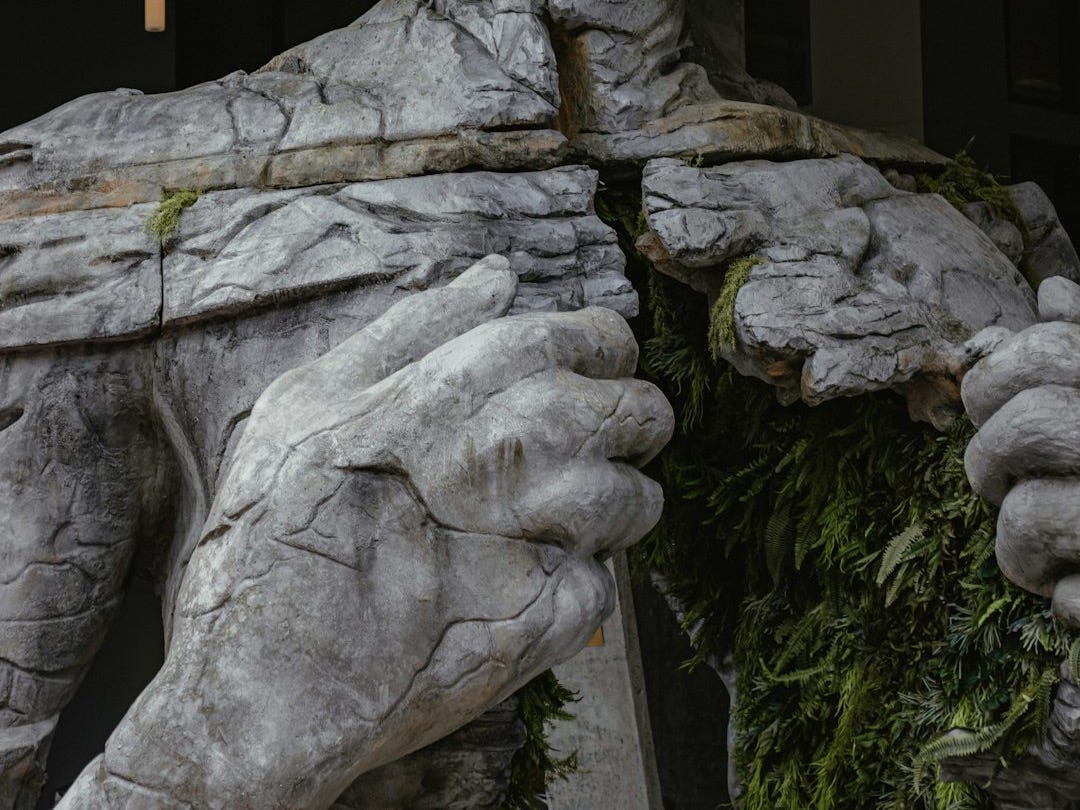
My body is broken. This morning I feel keenly aware of it as I shuffle slowly through the house, my muscles and joints protesting with every move. It is balmy for February, with highs in the 50s and 60s. Yet on days when I work from home, I remain bundled in my black hooded cardigan or gray hooded robe, hood on, trying to ward off the chills that are embedded deep within my bones. At least until the chills are abruptly supplanted by a wave of heat that force me to rapidly shed my layers. Within a few moments, the hot flash has passed and I am bundling up again.
At 30, I thought my body’s brokenness was a figment of my overstressed imagination, that I could stress manage the chronic pain, fatigue, and GI problems out of existence. At 40, I’d grudgingly accepted its presence, but aimed to keep it hidden with the right combination of nutrition, exercise, meditation, sleep, supplements, and complementary medicine. I never quite found the combination. At times it felt like I was close, but then a major illness or life transition would set my progress back, and I’d have to start all over again.
Now in my 50s, after twenty years of living with chronic illness, I am starting to accept this truth: my body is broken and will likely never be fixed. Indeed, as I inch closer to senior citizen status, I am forced to recognize that this moment may be as good as my body will get, that the sluggish digestion, bloated belly, pain, stiffness, and fatigue will not only remain with me, but that they will invite new friends as I age. That is a hard pill to swallow, yet I am beginning to find freedom in it.
There is freedom in seeing my body not as a mystery to be solved, but rather as a delicacy to be treasured and cared for. That’s not just true for those of us who struggle with illness and disability. It is true for all of us.
In her book, Live Nourished, Shana Minei Spence writes:
Having a body is hard. It requires so much work, and it is so incredibly needy. It doesn’t allow you to just take a day off. You need to feed it. You need to hydrate it. You need to wash it. You need to clothe it. You need to move it. You need to take it to different humans for inspections, maintenance, and checkups. You need to let it rest. And there is no one-size-fits-all manual that you receive at birth for guidance. You have to figure this shit out on your own. To complicate things even more, there is so much conflicting information that it’s hard to know what is meant for you as an individual.
Caring for any body is hard. Caring for a broken body is much more so. It takes tremendous time, energy, and resources. The user’s manual is thick. I spent the better of two decades trying to simplify it, trying to pretend that inside my broken body was a repaired body waiting to break out. I just had to find the map that would lead me to it.
Over the past year or two, I have been rewriting my user’s manual, this time firing the internal editor who prods me to “shorten this section just a bit” or to “soften the wording here” so that it feels more palatable to the reader. I am both the writer and primary audience of this manual. There is no page limitation, just as there is no limit to what my body needs to be well. And there is wellness in my broken body.
My body’s brokenness is testimony to what she has survived and how she continues to survive. My body’s wellness is testimony to the resilience that I have inherited from my ancestors and the efforts that I have put into caring for myself. More and more, I am learning to celebrate my wellness while acknowledging my brokenness. I celebrate the fact that, while after two decades I still struggle through “beginner” yoga routines, without my persistent practice my pain and stiffness would likely be disabling. I celebrate the fact that my fatigue has helped me to recognize that the breakneck pace of academia and ministry are toxic and unsustainable. I celebrate the fact that my limited energy forces me to get clear about what really matters to me.
In her poem, “The Unbroken,” Rashani Rea writes:
There is a brokenness
out of which comes the unbroken,
a shatteredness
out of which blooms the unshatterable.
My body is broken. Accepting and tending to my brokenness points me to the unshatterable wellness within.
Did anything in this post resonate with you? Leave a comment and let me know!
If you enjoyed this post, be sure to share, like, and subscribe (it encourages the algorithm to direct more traffic this way). I do a lot of my writing in coffee shops (locally owned, of course) so if you feel so moved (and are able), you can buy me a coffee or become a paid subscriber. Thank you for supporting my writing!
Two things resonated deeply with me:
1. “My body’s brokenness is testimony to what she has survived and how she continues to survive”.
Ten months ago on Maundy Thursday, I suddenly became a Heart Patient after surviving a rare, life-threatening cardiac event. It was one of those dramatic “before and after” moments that has forever changed my life and my body. While I still find it hard to accept, being a Heart Patient is very much a part of my identity now. I survived something that could have killed me and, even with the limitations, my body is a testament to the fact that I am alive.
2. “I am learning to celebrate my wellness while acknowledging my brokenness.”
I have to admit, I am BARELY learning to celebrate my wellness. Yes, I am doing so much better than 10 months ago. AND, I’ve also been hospitalized 4 times in 7 months for a total of 15 nights. My cardiac diagnoses are the type that register immediate worry on the face of any medical provider, even when I went to the clinic for a simple ear infection.
Every. Single. Cardiologist in the region knows about my case when they hear my name. Having an unusual cardiac history is most definitely NOT the type of uniqueness for which I want to be well-known. I have to take soooo medications, which still require fine-tuning.
I am still new to the idea of celebrating my wellness in the midst of my body’s brokenness … And yet, I just came home after playing the piano for the Sunday morning worship service at my church. I’m proud of the beautiful music that my broken body can create. I am proud of how the sounds generated by my imperfect body helped the congregation lift their voices together in song …. They sang with gusto this morning, and it was moving and joyful to hear them. I saw a few people with tears in their eyes during one hymn. A lady came up to me after the service and said, “I really can’t sing well at all, and I usually don’t sing because I sound terrible. But, the way you played the piano made me feel like I actually could sing. I just closed my eyes and sang because it was such a beautiful moment.” My broken body gave a self-conscious woman the courage to sing along with her family of faith… it’s an honour. This truly is a sign of wellness within my body’s brokenness.
Dr. Chanequa, thank you so much for helping me see this; your writing helped me appreciate my body after so many hard months. Thank you and bless you for your honesty and bravery in writing these beautiful and life-giving words.
I read this after journaling about recent bloodwork results, that left me feeling surprised and disappointed, and then frustrated with myself when I noticed my own reaction. I’ve come a long way in accepting the body I live in, and I also I wish I could be farther along in acceptance. Thanks for sharing from your place of lived wisdom.